8 Horror-Story Moments for Ballroom Dancers

Dance is filled with many joyful and peaceful moments, but anyone who has been in the industry for a while knows it also has its stress-filled moments.  Behind all the beautiful technique and elaborate costumes are hours of practicing, planning, and hoping that nothing goes wrong on performance day.  However, even when you plan everything down to the last detail, at least one thing is bound to fall out of place.  At least one unfortunate event will likely happen to most dancers, but it’s important that you don’t let them get the best of you.  Dance is a wholesome world and you can’t let one bad moment ruin it for you…although these moments can get very annoying!  We’re going to list some of the most irritating things dancers go through, and you can let us know if you’ve experienced some of the ones we mentioned or tell us about your own nerve-racking dance experiences in the comments! 

Forgetting Dance Shoes

There’s a reason that ballroom and Latin shoes are built the way they are; they are perfectly made for easy movement around the dance floor.  That being said, it really sucks when you are forced to dance in anything other than your dance shoes.  There are some street and athletic shoes that are fine and can get the job done, but when you accidentally show up to a party with uncomfortable shoes, it can be a nightmare when it’s time to dance.  No wonder why so many people just take off their dress shoes and dance barefoot at weddings and other formal events! 

Costume Malfunctions

This one has probably happened to every single dancer at some point.  So many things can go wrong when it comes to dance costumes, including rhinestones that fall off, broken shoes, torn dresses and pants, or even accidental stains.  Many people will often travel with costume repair kits because these mishaps are all too common.  This just goes to show that even when dancers are prepared for it, a costume blunder can still spoil their day a bit.

Hair and Makeup Malfunctions

Going right along with costume mishaps is hair and makeup malfunctions.  Men have it a bit easier for the most part, but ladies must make sure every hairpin and hair tie is in place or else things can get awkward on the dance floor.  Sweat also can make your makeup run, so it’s really important to fortify your makeup with setting sprays, powders, and good primers.  Have you ever had your bun fall out after doing a head whip?  Awful.  Ever had an eyelash come loose and block your vision?  Terrifying. 

Music Issues

You can’t control everything, and you definitely cannot control whatever technical difficulties DJs and emcees deal with.  Mistakes and tech issues happen, but we all can agree that one of the most stressful things in the dance world is showing up to a venue where you are scheduled to perform, and finding out that there is some issue with your music.  What’s even worse is being out there on the dance floor and having your music unexpectedly skip or completely cut off.  Most organizers are generous and will let dancers redo their performance if there is some issue with the music, but these kinds of problems are annoying, nonetheless.

Cancellations

Many dancers know the pain of spending months preparing, practicing, and stressing over an event only to have it cancelled.  Sure, there are reschedules and second chances, but knowing your routine which took hours of preparation and anticipation has to be delayed for a while can be very upsetting.  One good thing about a postponed dance event is that you get more time to prepare, but when events are 100% scratched, it can really be disheartening.

Forgetting Steps

Has your mind ever went completely blank while performing a solo or while you were trying to make it through your competition routine?  If it hasn’t, we hope it never happens to you because it is extremely frustrating.  Instructors and coaches always tell their students to practice a thousand times a day and then ten thousand more times in order to reduce the chance of forgetting steps.  However, the human brain is amazing and manages to still mess it up, even with endless hours of review.  When you blank out, the best you can do is smile, keep moving, and remind yourself that you’re doing the best you can!

Not-So-Great Dance Floors

Dance competitions and other Dancesport events usually come equipped with excellent floors to dance on, but every once in a while dancers will encounter venues without floors that are not very suitable for dancers to glide across.  Many venues will have floors that are too sticky to perform comfortable turns and spins, and others that that are so slick that it makes dancing a Viennese Waltz a risky experience.  There are certain hacks dancers can apply to their shoes to make their mobility on the floor much easier, but it would be nice if every single venue we encountered just had a perfect floor.  We can dream, can’t we?

Muscle Cramps

And finally, this might be the worst circumstance for dancers who are performing or competing.  Feeling a cramped muscle in your legs or feet is painful and horrible, especially when you aren’t able to immediately run off stage to treat it.  A way to prevent these muscle spasms and cramps is to make sure you have enough potassium, calcium, and magnesium, and drink plenty of water.  Even if you do end up experiencing a cramp that interrupts your dance, the best you can do in the moment is power through until you get a chance to sit, massage the affected area, rest, and try not to dwell too much on the mishap.

Stay healthy, show compassion to yourselves and others, and Keep Dancing! ^_^
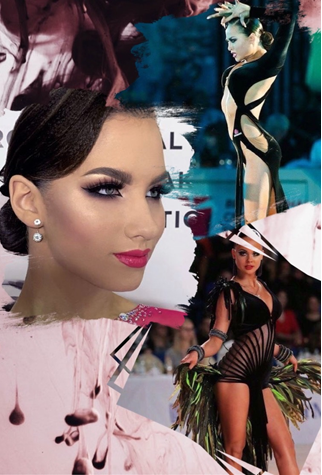
How Dance Can Help Anxiety

By now, it’s no surprise that dance helps physical, emotional, and mental health.  These benefits are a big reason why so many people start dancing, but the positive effect that it has on people’s mental well-being is what makes it an important stress-relieving activity, especially during these difficult times we are having.  Feelings of anxiety are probably at all-time highs for a lot of people, and while it can’t completely eliminate the anxious feelings, studies have shown that dance definitely does help minimize them.  Dance is something that obviously can’t be used as a replacement for medical anxiety treatments and therapy, but it can surely be a supplemental activity to help people cope.  In this post, we are going to outline the many reasons why dance is a great way to combat anxiety.

Calming and Creative

Dance is one of many activities that can be used as a mind-calming method and also as way to channel creativity.  This is why many therapists who treat anxiety have found that dance can be an effective treatment.  Much like drawing or making music, it helps us connect our emotions to some kind of outlet so we can express ourselves.  The outlet in this case is our bodies, and we are then able to exteriorize our emotions through our movements.  Even if dancers are given a specific set of steps, they can often control the amount of energy and intensity they put into their movements, which leads to a natural expression of their feelings.  This expression can happen mostly when dancers are free-dancing or improvising, but dance is also calming because it can contain a lot of repetitive movements.  Studies have shown that repetitive motions can release some anxiety.  When learning a new dance step or choreography, instructors will often have you repeat the movements until you have a strong grasp on them.  In addition to activating dancers’ muscle memory the repetitive movements can also be quite calming to an overactive mind.

Alleviating Negative Thoughts

In addition to being a creative and calming outlet, dance also makes our thoughts become simpler and calmer.  It can even make negative thoughts disappear for the moment since dancers must think of nothing but their movements, steps, and positions.  Dance helps to improve our mood and concentration which makes is a great method for managing anxiety.  When we leave our negative thoughts aside and focus on the activity of dance, it helps our brains create new thought patterns and neural circuits.  By refocusing our concentration, it also improves our mood.  For example; if a person is feeling anxious and worried, they are likely focused on thoughts or situations that they have to deal with later or things that have happened in the past.  When they are engaged in a dance class their focus changes to following the steps and patterns.  Since dance is an enjoyable activity for most people, this can also put them in a positive mood, improving their anxious state. 

Improves Self-Image

If your anxiety affects your self-image and confidence, dance can help improve those aspects of your life, as well.  For many people, signing up for dance lessons for the first time means they are learning a new skill.  Learning new things gives people a good sense of accomplishment, especially as adults.  If you are able to leave your lesson learning one or two new steps then that should make you feel pretty good, which should also boost your confidence.  Even people that have been dancing for a long time will frequently come across moments that make them feel proud and accomplished as a dancer.  Completing challenging classes and combinations is a big deal for many dancers and it makes them feel good to know they took on those challenges.  Another great thing about dance is the community of teachers, spectators, and fellow dancers that are there to support and praise each others’ growth and successes.  So even if you don’t feel like you’ve accomplished much, someone will be there to assure you that you’re doing a great job.

Exercise is an Anxiety Reducer

It’s obvious that dance is a form of exercise, and exercise is known to reduce stress and tension.  Engaging in regular exercise reduces the levels of the body’s stress hormones like adrenaline and cortisol.  It also produces endorphins which are chemicals in the brain that act as the body’s natural painkillers and mood-boosters.  Many therapists recommend exercise as a tool to manage anxiety and it can also help with depression and everyday stressors.  Not only is dance a great form of cardiovascular exercise, but it also can be a lot more fun and engaging than going on a run or lifting weights.

Stay healthy, show compassion to yourselves and others, and Keep Dancing! ^_^
The Ladies’ Guide to Getting Comp-Ready

pic1.png

Right now, there are plenty of social events that dancers can’t wait to get back to, and dance competitions are probably at the top of a lot of people’s lists.  Anyone who’s ever been to a Dancesport competition knows that they are unlike any other events; they are exciting opportunities for dancers to showcase their hard work and skills to some of the best professionals in the ballroom scene, and potentially be rewarded for their excellence.  Dance competitions are also a great time for dancers to get all “glammed up” and present their best selves.  Judges evaluate dancers on their dance ability and stage presence, so many dancers amp up their hair, makeup, and outfits so they can really shine out on the floor.  Leads usually have it pretty easy when it comes to getting ready.  Their looks typically don’t involve too much glamour, which means most of the focus falls on the ladies. 

Getting yourself competition-ready can be a long process, but it is very much worth it in the end, so we are going to give you all some tips when it comes to makeup, hair, and choosing a competition dress.  Hopefully this guide will be a great help to all you ladies when we finally get the chance to attend competitions and dance events again!

Finding the Right Competition Dress

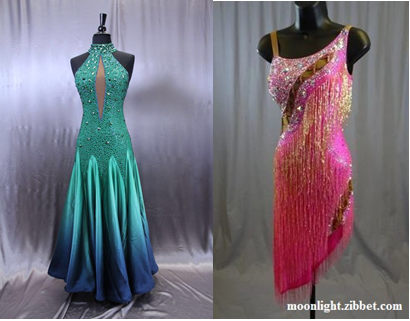
Before you think about looking for dresses, you have to think about the styles you are competing in.  Smooth/standard dresses have a completely different look compared to rhythm/Latin dresses.  Smooth/standard outfits are usually lavish ballroom gowns with floor-length skirts.  Latin dresses come with shorter skirts to showcase the complex leg and hip movements in this dance style.  Any of these dresses can come in a variety of different styles, cuts, and colors. 

pic2.png

Typical Smooth (left) and Rhythm (right) dresses

When choosing a dress you’ll want to think about your body type and which parts of your body you want or don’t want to be highlighted.  For instance, many dresses are backless, so if you know that you prefer your back being covered, be sure to find a dress that suits your preferences.  Additionally, if you are not comfortable showing off too much of your legs, you can easily find Latin/rhythm dresses that are knee-length.

Dresses also come in a variety of different colors and designs, so while it can be a good idea to choose a dress in your favorite color, you’ll also have to be mindful of how certain colors match your skin tone.  For instance; if you know you know that the color red typically does not look good on you, then it’s best to avoid that color.

There are many dress vendors to choose from all over the world, but it’s always better to see your options in person and try them on before you make a purchase.  While meeting with vendors and designers face-to-face, they will be able to help you find dresses that look best on you.  The quality of a dress varies from company to company, as well.  This is another important aspect to keep in mind while you are shopping.  A good quality dress won’t only look and feel better, but it will last a long time and you’ll be able to wear it for multiple events.  The best way to find a dress vendor is at a competition or showcase.  This way you can easily see the quality of the dresses and you’ll be able to see how they move with your own eyes.  Online custom orders are sometimes fine, but if you haven’t seen or tried on a dress from that vendor before, there’s no way of knowing how their material will actually feel once it’s on.  You should also look out for opportunities where vendors set up their shops at conventions, expos, or at your local studios.

Finally, remember to always ask for help or suggestions from a professional.  Your teachers and coaches know the competitive ballroom world very well, and they also want you to shine your best, so they are the best ones to go to when looking for a new dress.  If you can’t decide on a vendor or don’t know where to start, refer to your teachers and coaches.  Don’t settle for a dress without having them check it out and approve it first!

Hair and Makeup

Since your competition dress is not like any other typical evening gown or cocktail dress, your hair and makeup also have to be extraordinary.  Your hairstyle and makeup should not be a traditional look that you would wear for a wedding or gala, but should be extravagant instead.  Performance makeup looks are bold and dramatic because you have to be seen.  Dancers, actors, and others who have been in the performance world know that stage makeup is an entirely different animal when compared to everyday or formal makeup looks.  When intense lights and cameras are added, performers need to boost their makeup to ensure they can be seen from afar and that they look amazing on camera.  Performance hair also needs to be done well while also remaining elegant, in place, and out of your face.

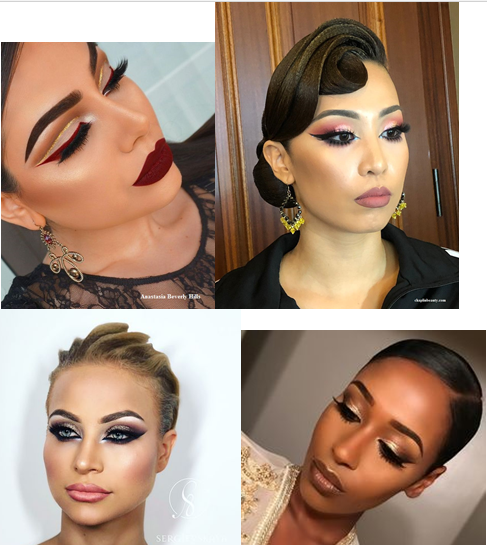
The phrase “less is more” doesn’t really apply when it comes to makeup for ballroom dancers.  The must-haves are false eyelashes, bold eye shadow, and a lip color (red and pink usually work best).  The bigger the eyelashes, the better, but there’s no need to obstruct your vision; as long as they are visibly noticeable from a few feet away, then they should be acceptable.  It is also highly recommended that you wear a foundation that matches your skin tone, and contour your face.  If you don’t know what contouring is, it is basically makeup technique that defines, enhances, and sculpts the structure of your face.  Also be sure to apply highlighter, blush, black eyeliner, and fill in your brows.  Below are some good examples of dramatic ballroom looks:

pic3.png


It is also recommended to get a spray tan if you need to.  Lighter skin tones can get washed out by all the lights on stage, and a tan can ensure that you look your best in photos (depending on how many shades darker you get, make sure you also get a foundation to match your tan).  If you decide on a spray tan, get it done at least a day or two before your event to give the color a chance to “set”.

 If you are not comfortable with doing your own makeup, you can always set up an appointment to have a professional do it for you.  If you have some time on your hands and want to learn how to do it yourself, you can search online for a wide variety of makeup tutorials.  There is a YouTuber named Rachel Macintosh who has video tutorials on how to do ballroom makeup and hair.  You can check out her full tutorial playlist here:

https://www.youtube.com/playlist?list=PLonF4RhEKW8gTPF447Ew8G9EQXc460df1

Everyone has a different hair type, so when doing your hair for competition, just keep in mind which styles and products work best with your hair.  A nice slicked-back updo will work best for dancers, but to control loose strands of hair and flyaways, use a gel or hairspray that will lock everything in place.  Many dancers also add decorative hairpieces, pins, and rhinestones to their hair to compliment their dress and amplify their look. When in doubt, book an appointment with a certified competition hair stylist if you aren’t sure how you should handle it.  Some examples of ballroom hairstyles are below:

pic4.png

The main theme when it comes to dressing up for dance competitions is intensity.  If your makeup, dress, and hair look normal, then it’s not enough!  Competitions and other Dancesport events are one of the only times in the year where dancers get to glam up and present themselves as extravagantly as possible.  Use these opportunities well, and never shy away from looking your best!

Stay healthy, show compassion to yourselves and others, and Keep Dancing! ^_^
What Dancers Can Do While Quarantined

It’s rare when the entire world is simultaneously focused on a single subject, but we are experiencing one of those rare moments right now.  The COVID-19 pandemic is on everyone’s minds across the globe, and many states and countries have ordered their citizens to stay at home and away from large groups to prevent more people from catching and spreading the virus.  While this is a good step towards fighting COVID-19, it has been having an effect on people’s careers and daily routines.  Dancers have also been affected since many studios are closed, and many upcoming events have been postponed.  Even though this time has been hard, many dancers are finding ways to keep moving even though they are stuck at home.  We are going to list a few of these activities you can do to make sure you stay active and healthy!

Participate in Social Media Challenges

If you are on Instagram, you may have noticed a lot of people tagging each other in their posts and Instagram stories to do various challenges such as, doing pushups, sit ups, choreography, and even full-body workouts.  Since a lot of gyms and studios are closed, friends are holding each other accountable for doing various activities, making sure they stay active.  You don’t have to wait for one of your friends to tag you to participate in these challenges to be a part of the action.  You can record yourself doing a dance, a set of strength exercises, or any kind of physical activity and challenge your friends to do the same!

Keep Practicing

We’ve discussed rehearsing and practicing at home in our previous posts, and the same principle applies here.  Even if you can’t physically go to your studio or dance with your instructor or partner, you can still practice your individual steps and technique.  You don’t need a lot of space to go through most of the basic ballroom and Latin steps, so you can dance in your living room, kitchen, or wherever you can find a few square inches of floor space.

Do a Home Workout

If you want to do something other than dance to stay active, you can do a cardio or strength training.  Many dancers go to the gym and workout to supplement their dancing, but even with all of the gyms closed, that doesn’t mean your training has to stop.  A quick search on YouTube will reveal thousands of workout videos that you can follow along to.  If you don’t have equipment, that’s no problem either!  There are plenty of videos specifically designed to be done without equipment, and they also don’t require a lot of floor space.  There are hundreds of channels that specialize in fitness, so you should have no problem finding videos that work for you.

Yoga

We have also discussed yoga on our blog before, and it continues to be a beneficial cross-training activity for dancers.  Not only is good for stretching your muscles releasing tension, but it also puts you in a good headspace, which is very important during these times.  If you know a few yoga poses, you can practice those in your free time, but if you are looking for a more guided flow, YouTube is another great resource that will allow you to follow along with an instructor.

Take a Walk

Luckily, we all aren’t confined solely to our homes during this pandemic.  When you can, it is good to step outside and walk around your block, to the park, or whatever distance you want.  Even if you don’t feel like dancing or working out, try and take a few steps outside, especially if the weather is nice!  (But remember to stay six feet away from crowds and other people!)

Learn a New Skill

Don’t feel like moving around?  No problem!  You can keep the creative side of your brain running by exploring a new skill or hobby that will possibly supplement your dance career!  For instance; ladies can practice their competition hair and makeup techniques to show off at their next dance event.  You can also focus on cooking and learning new recipes to keep you healthy. 

Stay Connected with Your Dance Family

 The great thing about social media, smart phones, and modern technology is that it allows us to stay in touch with our friends and family even when they are miles away.  Many dancers are using applications like Zoom and Skype to stay connected with each other, and we agree that this is a great thing!  With big events and classes getting cancelled, it’s good to remotely connect with and check in on those friends you normally would only see at the studio or a competition.

Take Virtual Lessons and Classes

Finally, it is highly encouraged that you take advantage of virtual dance lessons and classes if you have the chance.  Many instructors and studios, including our own, are doing what they can to make sure their dancers don’t feel so isolated and are trying to make it easier for them to stick to their regular dance routines.  If you normally take lessons at our studio you don’t have to stop!  You also have the option of joining a fun group class to get you on your feet!  Follow the link if you want to learn more and get started on virtual learning with us!

http://celebritydancestudio.com/private-lessons

Stay healthy, show compassion to yourselves and others, and Keep Dancing! ^_^

How Dancers Can Adjust Through the Changing Seasons

How Dancers Can Adjust Through the Changing Seasons

It may not come as a surprise that changes in temperature can greatly affect your body.  For one thing, our body temperatures will rise and fall with the seasons, making some movements easier or more difficult depending on how we are equipped.  While temperature may be the main thing on your mind when the seasons change, there is actually a lot more going on with our bodies that we should be aware of as dancers.  We are going to take you through all four seasons and explain how each one uniquely affects dancers’ bodies.

Winter

Currently in the Midwest, winter is slowly coming to an end, but a lot of people are still feeling the effects.  With cold weather comes dry air, and with dry air comes dry skin.  This might become a problem for ladies who may have to perform in outfits that show off their arms and legs, but dry or dull skin can usually be fixed with a hydrating lotion or just by wearing tights.  Dry air can also make it harder for some to breathe, but dancers with asthma may notice that their symptoms worsen during the colder months.  If you have asthma and haven’t been doing this already, keep your inhaler handy even when you head to the dance studio.  Flu and cold viruses also spread around during wintertime, so dancers should take vitamins and supplements to keep their immune systems strong.  It would be a shame to have to cancel on a big dance event because of sickness.

Mobility and flexibility is often a main focus for dancers, and this aspect can be harder to deal with during winter.  Those suffering from arthritis may see their symptoms worsen, and even those who don’t may notice their joints feeling a bit achier.  Treat any aches and pains as you normally would, and be wary of putting too much pressure on yourself when you feel affected.  It’s generally harder to move around in cold weather so make sure you warm your body up well before you decide to stretch or execute big dance movements.

Winter can also have a big effect on our moods since the sun is rarely out during this time.  People with seasonal affective disorder will notice their moods changing the most, but less sunlight will generally make a lot of people feel sluggish and melancholy.  The good thing is that dancing is an activity that can naturally raise your mood and energy levels, but remember to practice self-care and anything else you need to combat the “gloomy weather”.

Spring

Spring may be when your energy levels start to rise because there will be more daylight, but it’s not all sunshine and rainbows.  This season brings warm weather and rain, which may leave your dance space feeling humid.  Good ventilation will usually fix humidity, but in case you start to notice your floors getting slicker or stickier, keep in mind that it may just be the weather.

Similar to winter, springtime can also bring up issues with our immune systems.  When the weather changes, a lot of people start to get sick, so it’s important to continue taking vitamins and washing your hands.  Your allergies may also start flaring up more, and if this is interfering with your dancing, take the necessary medications and preventative methods so that you don’t spend too much time during practice treating your runny eyes and nose.

Additionally, dancers with arthritis or chronic pain may feel more discomfort on stormy, cold, or damp days.  To combat this, dancers can try planning ahead for the weather and bring pain medication that will help them get through a full rehearsal.

Summer

Summer is quite possibly the best time to dance because there is optimal sunlight and therefore plenty of energy for dancers.  However, the high temperatures of this season bring more sweat, and risks such as heat exhaustion and heat stroke.  These issues can put you into a mental fog, hindering your ability to stay alert during your lessons and can even cause some serious health problems.  The best thing to do is remember to hydrate more than usual since it is easier to become dehydrated in the summertime, and rehearse in air-conditioned or well ventilated spaces.

Dancers should also make it a habit to wear sunscreen to avoid sun damage.  Not only are sunburns unpleasant to look at, but they can also hurt a lot and make dancing very uncomfortable when you execute moves that cause you to touch or irritate the burns on your skin.

Fall

When fall comes around, your energy may drop once again because of the changing weather and reduced sunlight.  People’s anxiety may also rise because this season because many people are going through a transitional period during this time.  And once again, you could become susceptible to the cold or flu because of the changing weather. Essentially, the weather is transitioning to winter so all the symptoms you experience in winter will be coming up again and you’ll just repeat the cycle.

One good thing about fall is that your memory may become sharper during this season!  Studies show that your memory actually improves during this time since the part of your brain that’s responsible for remembering things is firing off at a higher rate.  You may also be able to be more productive, so this would be a good time for learning and working on choreography if you are a dancer! (https://www.bustle.com/articles/190110-what-autumn-does-to-your-body)

What Should Dancers Do Throughout the Changing Seasons?

In general, dancers should stay mindful of their bodies and pay attention to any pain, discomfort, or drastic mood changes that greatly affect their ability to perform well.  When it comes to mind and body health, the best thing to do overall is drink plenty of water and make sure you’re getting all your main vitamins.  Dressing appropriately for the weather is also important as well.  For example; even if you are feeling warm after a long, tiring practice, it’s still important to bundle up and ensure your muscles stay warm (yes, even if you’re all sweaty).  If you are a person that dances with multiple partners or attends many parties, do your best to prevent the spread of viruses to your fellow dancers and to protect yourself throughout the year.  You can do this by remembering to wash your hands regularly and staying home if you are ill.  Dancing is not fun when you are feeling sick anyway, so don’t leave the house if you don’t have to.  If absolutely must go to practice or dance at an important event, make sure you take enough medications to get you through the day, and then set aside plenty of recovery time afterwards!

Happy Dancing! ^_^

Productive Things to Do Backstage (When You’re Not Dancing)

On show day, every performer has a certain task or two that they could be doing before they take the stage.  If you are new to the performance world, you may be wondering what dancers actually do backstage while they wait for their time to shine.  There are actually a variety of different activities people can do behind the scenes like read books, play mobile games, or…nap!  These are all fine ways to pass the time, but if you are looking to make good use of your time backstage, there are quite a few more productive things you could do that will enhance your overall experience on performance day.


Practice

You’ve probably already spent many hours practicing for your performance days before, but a little extra practice never hurt anyone!  If you have some time to spare before your number, you can always run through the steps of your routine.  You obviously don’t need to do your dance full-out, but simply marking it could help.  If you’re in a formation dance or group number, find a dance mate to practice with.  They also may be able to help you with any last-minute questions you may have.  It’s also a good idea to bring headphones with you so you can clearly listen to your music while you practice your routine.

Do Makeup and Help Others

It’s always best to have most of your makeup done before you arrive to the show venue, but in case you have a good amount of time before you have to go on stage, you can always use that extra time to finish your makeup.  Additionally, if you have free time and are comfortable enough doing others’ makeup, you can also offer to help your dance mates with their own looks. 

Warm Up and Stretch

Stretching is always a good thing to do while you wait for your number.  It will help keep you limber so you can go on stage and give your best performance.  Keeping your body warm also helps so you’ll be less likely to pull any muscles.  Marking and reviewing your routine will help keep your joints and muscles warm, so you can knock out two objectives in one!

Queue Up Your Costumes

It can be stressful and confusing if you have multiple routines with many costumes and costume pieces.  The backstage area can get hectic when there are a bunch of other dancers running around with their costume pieces everywhere.  You can’t always control what other dancers do, but you can keep yourself sane by keeping track of your own costume pieces.  To make things easier on show day, sort out your costumes and all costume pieces by laying them out in the same order as the show order.  Place them on a chair or on hangers, and try to keep all of your belongs in one spot to prevent you from losing anything!

Eat Something

If you’re losing steam by waiting backstage, and you’ve done all the practicing, makeup, and stretching you can do, you can always have a snack to keep your energy up.  Snacks can be especially helpful if you are participating in a showcase that is several hours long.  You will need to eat something light or drink water to stay hydrated while you are backstage.  There’s nothing worse than getting a muscle cramp or a dizzy spell right before you have to hit the stage.

Enjoy the Show

You really don’t have to stay hidden backstage for the entire show.  Unless you are given specific directions, you should be allowed to watch other performances before and after your own.  As long as you make it back on deck in time for your own performance then watching from the wings, the side of the stage or from the back of the audience can be an immersive experience.  Watching the show while you wait is not only entertaining but it gives you the chance to support and cheer on your fellow dancers.  Watching others perform can also give off energy and motivation that you can channel into your own performances.


Happy Dancing ^_^

Love Languages for Dancers

Author, Gary Chapman wrote a book in 1992 titled The Five Love Languages.  It outlines five ways to express and experience love between romantic partners.  These methods are now referred to as “love languages” by Chapman and those who are aware of the methods he describes in his book.  Many people are generally aware of these love languages, and they can be applied to platonic friendships, as well.  Since Valentine’s Day is coming soon, we want to highlight some of the ways these love languages can apply to dancers and dance-based relationships.  So if you are in a relationship with a dancer, friends with a dancer, or if you are a dancer looking for ways to let your dance partner and dance friends know they’re appreciated, then look no further for some nice and simple ideas!

Receiving Gifts

Gift-giving is a really nice way to show someone you care about them and that you are thinking of them.  People usually gift each other with things they know the other will enjoy or things that remind them of each other.  For a dancer, you can use this love language to:

·         Buy them tickets to a dance show

·         Get them new dance shoes or attire

·         Buy dance lessons or studio gift certificates

·         Surprise them with a date night of dancing

·         Pay for a dance workshop or masterclass from their favorite coach or choreographer

·         Surprise them with flowers or chocolate after a competition or performance

Quality Time

Another thing people do to express love is spending quality time with each other.  This includes any activity where partners are together and have a chance to converse or just enjoy each other’s company.  You can spend quality time with a dancer by:

·         Going out to a dance party together

·         Taking a group class or workshop

·         Practicing steps together

·         Collaborating on a dance routine

·         Enjoying a dance showcase together

·         Date night of watching dance movies


Words of Affirmation

Words of affirmation are things you can say to a partner or friend to let them know they are loved and appreciated.  There are many ways you can let dancers know you care about them, and a few are:

·         Giving them a confidence boost if they feel insecure about their dancing

·         Complimenting their dance skills

·         Cheering them on at competitions and showcases

·         Congratulating them on dance accomplishments

Acts of Service

Many people really appreciate when their romantic partners and friends do random tasks for them such as, cleaning, cooking, or running errands for them.  Acts of service you could do for dancers include:

·         Choreographing a piece for them

·         Driving them to practice, shows, or competitions

·         Fixing their costumes

·         Helping them with dance steps or choreography

·         Buying dancing supplies that they’ll need for a full day of dancing

Physical Touch

Hugs, kisses, and other kind gestures are ways that people show affection towards each other.  Dance itself is a form of physical touch, but there are other ways dancers can use this love language to show they care:

·         Dancing together (obviously)

·         Sitting together during a dance show or competition

·         Practicing dance connection

·         Giving them hugs when they’ve done a good job

Happy Dancing! ^_^

Tools Every Dancer Should Have

The only thing you really need to dance is yourself; perhaps another person if you are doing a partner dance.  Dance is a great activity because it doesn’t require too many supplies to get started, but if you’ve been doing it for a while, it doesn’t hurt to have a few extra tools that might help you with your training.  Many are already aware of tools such as dance shoes, water bottles, and performance wear, but we are going to go over a few extra items you may not have thought of that may aid you during rehearsals.

“Dance Socks”

You may be thinking, “I’m a ballroom dancer!  I wear dance shoes, not socks!”  However, keeping an old pair of socks nearby may be more helpful than you think. 

As you already know, ballroom dance shoes have a special design – they have suede soles.  In the event that a dancer does not have suede soles, allowing them to easily move across the floor, they usually end up dancing in sneakers or another type of shoe that may grip to the dance floor.  Gripping makes it difficult for dancers to perform turns, spins, and can even cause injury to your ankles and knees.  Therefore, there are certain products available that can help dancers to combat shoes that grip.  The brand, DANCESOCKS is a piece of fabric that can be placed around your sneakers and will allow you to turn, spin, and move easily on a dance floor (and even carpet) without the stress on your knees and ankles.  You can also save money and make your own “dancesocks” by simply cutting a pair of old socks and fitting them around your shoe.  You would just need to make sure the socks you use aren’t too slippery for the floor.  Of course no “dancesock” can be a replacement for an actual dance shoe, but if you ever show up to practice without your ballroom gear, a sock might be just what you need instead of having to dance in sticky sneakers.

Bluetooth Speaker

If you are practicing in an area other than your dance studio, it may be difficult to find a good quality audio source.  You will need something that’s loud and clear enough for you and other dance partners to hear, so playing music from your phone may not be good enough.  In that case, a speaker may be ideal.

If you are practicing by yourself, a pair of headphones will probably work just fine when you need to listen to music.  However, if you are a person that doesn’t like headphones getting in the way, or if you have other dance partners that need to hear the music, then speakers are the best option.  Playing music from your phone may not be loud enough, so it’s better to have a speaker that can connect to your phone or another type of music player.  Bluetooth speakers are the best option because they are wireless, and are usually small and portable which makes it easy for dancers to bring anywhere and move around easily.

Recording Device

Many dancers use their phones to record themselves and to play music.  However, all phones are not capable of recording and playing music at the same time.  In this case, it’s best to have a camera, or another type of recording device that you can easily set up.  Devices you can use for recording are iPads or tablets, small camcorders, or GoPro’s.  These devices are also great because they allow you to free up a lot of extra data on your phone so that you won’t have to keep deleting files to make room for every new video.  Recording is useful for all dancers at any level, so everyone should consider bringing a camera to practice so you can review your footage later, make improvements to your movement, or practice complex choreography.

If you don’t have another recording device or space on your phone to record, you can also see if a friend or instructor will let you use their device to record, and they can send the footage to you at a later time!

Shoe Brush

We’ve discussed shoe care before, but this continues to be an important point.  If you own ballroom dance shoes with suede bottoms, you will definitely need a wire shoe brush to clean your soles every once and a while.  Over time, your shoes will need to be brushed to scrape of any impurities they may have collected over time, and to make sure your shoes allow you to glide across the floor with as much ease as possible.  The wire brush also “roughs up” the soles and adds a little friction to suede that has become too smooth, making the floor seem slicker to dancers.  Most dancers may be able to borrow a spare wire brush from their studio, but it’s always best to have your own, especially if you frequently dance at outside events or competitions.

Heel Protectors

This additional “tool” for dance shoes is not completely necessary, but they can be very useful if you want to increase the longevity of your dance shoes.  Heel protectors are used for women’s dance shoes and protect the base of the heels from the floor.  They prevent high heels from getting damaged and the floor from getting scratched up and worn down, as well.  If you are a dancer that just purchased a new expensive pair of shoes and you want them to last as long as possible (or if you don’t want to scratch up a dance floor), a pair of heel protectors will definitely help you to achieve that goal.

Foam Roller or Massage Ball

Every dancer should treat themselves with a massage, but if you can’t make it to a massage therapist or athletic trainer, foam rolling or massage balls are great ways to loosen muscles and prevent future injuries.  If you are feeling sore after practice or if you feel tight and need to loosen up before you dance, massaging your calves, back, thighs, or any other parts of your body that might be feeling tight or sore can be very beneficial.  Rolling out your muscles with a foam roller or rolling your feet on a massage ball is especially important after a long rehearsal or workout.  The pressure you apply to your sore or tight areas will mostly likely hurt a bit, but the slight pain is normal, and will help you out in the long run. (Don’t overdo it, though!  And only roll out muscles that you know are sore due to your workout, and not a serious injury.)


 Happy Dancing! ^_^

Cross-Training for Ballroom Dancers

Cross-Training for Ballroom Dancers

Cross-training is when an athlete participates in an activity other than their usual sport or profession.  Usually these supplementary activities and exercises will ultimately improve performance in their main sport.  For example; if a football player plays soccer or rugby during their off-season, that would be considered cross-training.  Even though these are different than football, engaging in theses sports will work muscle groups that players also need for their main sport.  This is why cross-training is encouraged during athletes’ off-season.

Dancers can also participate in cross-training activities.  Many engage in highly physical activities that will give them an intense cardiovascular workout while also building the muscles that they use to dance.  While these activities such as aerobics, weight lifting, and yoga are beneficial for dancers, there are also specific dance classes they can take that give them a great workout and even condition them to be stronger ballroom dancers.  Many competitive and professional dancers will use various dance styles to cross-train, but these classes are also useful for social dancers and those that just dance for fun.  If you are a person who is looking for an extra activity to participate in that also relates to dance, a few of these styles may interest you.

Ballet

The first thing that may come to mind when thinking about ballet is dancers standing on their toes while wearing tutus.  This image definitely has some truth to it, but there is more to this style than frilly outfits and pointe shoes.  If a child starts showing interest in dance, many parents will enrolled them in ballet first because there are so many foundational and fundamental elements included in it.  It teaches good posture and how to turn out the hips - something that Latin/rhythm dancers need to do during many of their movements.  Ballet also gives dancers a full body workout by engaging every single muscle.  Students will find that it intensely strengthens their leg, arm, and core muscles.  It will also help to improve balance and flexibility.  Endurance will also be significantly boosted after taking ballet classes for a while.  Instructors will have students going through movements at painfully slow paces, but these exercises or “adagios” only benefit them by building up their physical endurance.  After a bunch of ballet classes, ballroom dancers may find it easier to move through certain ballroom or Latin steps and figures because they will gain a certain amount of strength.


Jazz

The athletic, full-bodied nature of jazz dance develops arm, leg and core strength, similar to how ballet can, but this dance style adds more contemporary and modern elements.  With the techniques learned in a jazz class, dancers can focus on improving their arm styling, sharpness of moment, speed, and control.  It will also give dancers the chance to work on balance, since there are many movements in jazz that require, turning and spinning.  Jazz is a dance style that sets itself apart from ballet and ballroom dance because it may also focus on “floor work” or dancing while on the floor instead of standing.  While floor work may not often be used in ballroom, it can give dancers the opportunity to work on muscle groups that they normally wouldn’t exercise, including some in the arms and core.  Overall, jazz is a fun, high-energy dance style of which dancers can transfer the techniques and skills that they’ve learned into other lively partner dances such as all Latin styles, and even some foxtrot and quickstep.


Tap

Tap can be a highly entertaining dance style to participate in.  It’s all about making rhythmic sounds with the feet.  In order to tap dance, students need a pair of tap shoes that have metal “taps” on the bottom.  This style is a great way for ballroom dancers to cross train because it helps them to actively focus on rhythm and timing.  It also forces dancers to focus on footwork since 90% of the style relies on your foot movements.  It’s also a perfect one for developing ankle strength.  Tap classes also are a great way to practice combing complex footwork and arm styling, which can be difficult if dancers aren’t used to that particular skill.  Since tap places so much focus on the feet, it can be challenging for dancers to know what to do with their arms, so instructors will most likely train dancers on how to move your feet and arms in a cohesive and non-awkward way.


Hip Hop

Learning and practicing sharpness of movement is something dancers can focus on in a jazz class, but if they really want to learn how to “attack” movements and also get themselves in a good “groove” then hip hop classes are the way to go.  As opposed to other dance styles where upright posture is important, hip hop usually has dancers placed in a more relaxed position, and many of the movements are encouraged to be low to the ground.  “Grooving” is also a fundamental element in this style.  In dance, a “groove” can be defined as an “inner feeling of movement that goes along with a given set of dance steps”, or “the way the body interprets beats”.  For example; every dancer can be given the same piece of choreography, but it will look different on every single person because they will put their own “feeling” into it.  Hip hop classes can help dancers find their own groove and way of feeling music while also helping them learn a unique and fun dance style.  While this style is not often considered a technical one, there are actually many techniques students can learn such as popping, locking, breaking, and many other elements they can study and potentially add into their ballroom and Latin routines.


Heels Classes

Recently, “heels classes” have emerged in the dance scene as a way to teach dancers how to perform in high-heeled shoes with proper technique.  In addition to showing dancers how to walk in heels, these classes also provide training for executing jazz, street, and hip hop choreography while in heels.  Latin and rhythm dancers may already be used to dancing in heels, but heels classes are typically designed to train dancers who want to work in the commercial dance industry.  During stage shows and other commercial performances, female dancers often have to wear high heels.  Many dancers are not properly trained to do their jazz and hip hop steps in heels, so these classes help them learn to dance comfortably and safely.  While ballroom dancers may already have experience with heels, this type of class can still help by continuing to build up dancers’ ankle strength.  Dancers can also get the chance to focus on solo movement, which is something that they may not focus on very often with partner dancing.  Heels classes are also similar to many Latin and rhythm styles because they add a lot of sensual and burlesque-inspired movements, especially within the hips and arms. 


Musical Theater

The actual dance steps in a musical theatre class can consist of any dance style including ballroom, but the main focus of these classes is to combine acting and dancing.  Musical theater dance classes typically train dancers to perform as if they are on stage for a major production.  During musicals, you may notice that even the background dancers’ movements are highly expressive and closely match the lyrics or tone of the song being performed.  If a dancer has trouble with facial expressions, adding extra energy to their movements, or wants to learn how to add drama to their dance pieces, then a musical theater class can definitely help them out.  Taking these classes is also a great way to work on musicality since the choreography is usually focused on lyrics and specific accents in the music.  These classes may consist of some dance technique, but the instructor will most likely put emphasis on adding personality and character to routines.  Musical theater is all about telling a story, and this dance style will give dancers the chance to do closely focus on that aspect.


Happy Dancing! ^_^

More Info About Dance Shoes

A while back, we presented some basic facts about dance shoes that new dancers may have needed to know.  However, if you’ve been dancing for a while you may have the shoes, but there is a bit more to owning dance shoes than just putting them on, heading to practice, and throwing them back in your bag at the end of the day.  You may know the basics, but there are plenty of additional things dancers need to know in order to properly care for their shoes, and we are going to review a few of them here!


How Many Pairs You Need

When you first start taking dance lessons, you may just start off with one type of dance shoe.  However, you might later find out that the style of shoe you have doesn’t work as well for other dance styles.  For instance, women who start off with Latin heels as their first pair may quickly discover how hard it is to comfortably Waltz in those.  Eventually you’ll learn that certain shoes work best for specific dances.  If you are seriously training in multiple styles, it wouldn’t be a bad idea to obtain a pair of shoes that would fit better with each style.  Most dancers have two pairs of dance shoes – for rhythm and smooth dances, but many just start training with a standard practice shoe that accommodates all dance styles. 

Dancers that perform or compete often have multiple pairs of shoes – for practice and for the stage.  If you are thinking of going the performance or competition route, then having separate sets of shoes would be ideal in the long-run.


Where to Buy Them

Many stores sell ballroom dance shoes, but quality can vary across different retailors.  We recommend checking your dance studio first.  Many ballroom studios have shoes for sale and you may just find the style and size you are looking for.  If you can’t find any at your dance studio, try checking out the vendors at the next showcase or competition you attend.  This is your best bet and you will most likely have the best luck when it comes to quality and finding a perfect fit.  If all else fails, you can shop online for shoes.  The only downside is that you won’t be able to try them on before purchasing, but if you are lucky enough to find a good-fitting shoe right away, then you should be all set!


Heel Height

Many dancers have separate shoes for different dance styles because those shoes have varying heel heights and designs.  Smooth and standard shoes often have short heels.  Men’s shoes are no higher than half an inch.  Women’s heels are no more than two inches and almost never have an open toe.  Since smooth and standard dances involve a lot of gliding and followers have to travel backwards, the heels are short to make dancers’ movements easier. 

Rhythm and Latin shoes can have higher heels since Latin steps require dancers to be up on their toes.  Women’s shoes can also be open-toed and have a little more glam than smooth and standard shoes.  When picking out shoes, it’s good to be aware of varying heel heights.  If you are not comfortable dancing in high heels yet but aspire to be a Latin dancer, start off with a shoe that’s about 2 inches, and try to build yourself up from there (and if you’re a lead, don’t worry…your shoe’s heels won’t go any higher than an inch). 


Breaking In Your Shoes

Your dance shoes should fit like a glove, but if they are a little too tight at first, they may just need to be broken in.  The best way to break in a new pair of shoes is to dance in them.  The more frequently you use them, the looser they will become.  Depending on the kind of material your shoes are made of, it may take longer for you to break them in.  Leather shoes typically take the longest to adjust to, so if you are looking to break them in fast, you might want to avoid this material.  If they are still feeling too tight after a long period of time, then you might just need to upgrade to a bigger size.  Also, keep in mind that your feet may become swollen after standing around or dancing all day, so remember to take breaks during practice and rest your feet often.


Caring For Your Shoes

Dance shoes are a pretty big investment, so it’s good to make sure that they last as long as possible.   You should always store them in a safe and dry place whenever they aren’t in use.  You should also only wear your shoes indoors and on performance areas to make sure that the soles stay clean.  If the soles of your shoes do get dirty or sticky, use a shoe brush to clean them off.

If you end up getting stains on your shoes, you obviously can’t just throw them in the washer and dryer because they would get ruined.  Depending on what material your shoes are made of, there are different ways to clean them.  Most dance shoes are made of leather or patent leather material, so you can always use a baby wipe or damp paper towel for stains.  You can also use a rubber eraser or shoe polish to treat scuffs.  If you have satin shoes, you can use mild soap and a damp towel to clean stains, but be wary that hot water can damage this kind of material.  Regardless, you can always check with your shoe’s manufacturer for specific care instructions.


When to Replace Them

Finally, it’s always good to know when exactly is a good time to let a pair of dance shoes go.  The most obvious sign that it’s time to get new shoes is when they are falling apart.  If you have multiple rips, holes, and tears in your shoes that are beyond repair, it’s definitely time to replace them.  If you have found new dance shoes that are better than your current ones, you don’t necessarily have to abandon them forever.  You can use shoes that are more roughed-up as practice shoes and save your nicer shoes for performances.  This way, you won’t have to worry about scuffing or wearing down your nicer, new pair of shoes.


Happy Dancing! ^_^

Dance Terms You Should Know

Learning to dance is almost like starting a new school course.  In addition to learning many new dance steps you will also end up developing a new dance vocabulary.  You may just end up picking up a few of these dance terms casually during your lessons, but it’s not a bad idea to actively learn and study them.  Many of these terms will be relevant to your dance journey and each one can be beneficial to your dance training and development.  There are hundreds of dance terms to learn and so many definitions to memorize, and while we obviously can’t go through every single one, we are going to list off a few that are quite important when dancers are in the early stages of their training.  Not only will you learn what some of these terms mean, but we will also explain why it’s worthwhile to know them.


Line of Dance

In the ballroom world, the “line of dance” refers to the imaginary line on the floor that represents the flow of traffic for dancers.  That flow of “traffic” always moves in a counter-clockwise direction to prevent dancers from colliding into each other.  The line of dance is mainly acknowledged in travelling dances such as Foxtrot, Tango, and Waltz, but other dances like Polka and Merengue will travel along this line, if they need to.  It’s important to know which direction to travel, especially in social dancing situations.  It would be unfortunate to run into fellow dancers during a party or competition, so this why this “road rule” is so important.


Rhythm and Timing

“Rhythm” and “timing” actually have quite different meanings, so as dancers it’s helpful to know the differences between the two and the contexts they are used in.  Rhythm is defined as “a strong, regular repeated pattern of movement or sound.”  Timing measures your ability to move along with the beat of the music.  In other words, dancers don’t necessarily need music in order work on their rhythm.  For example; if you’ve ever heard someone say that they can’t learn to dance because they don’t have “rhythm”, they are actually mistaken because that can achieve good timing; it just has to be learned and practiced.  From there, good rhythm can be developed as well.  As a new dancer, it’s best to focus on timing since a large part of dancing is the ability to keep up with music. (For more information on these concepts, check out our previous blog post “How to Improve Your Timing”)


Cuban Motion

Cuban motion is the rhythmic swaying of the hips often seen in Latin/rhythm dances.  This motion is caused when dancers bend and straighten their knees, allowing their hips to move from side to side.  Cuban motion is sometimes easier to dance and more noticeable when doing slower dances like Rumba or Bolero.  When learning various Latin/rhythm dances, it will become apparent that Cuban motion is what sets these dances apart from the others.  The rhythmic movement of the hips is often what defines a lot of these dances and it is definitely something that judges and other observers will be looking for during competitions and shows, so it’s a good idea to get familiar with it if you ever plan on showcasing or competing.


Lead and Follow

This is one of the most essential dance terms you should be familiar with since it will have a lot to do with your role as a dancer.  In partner dancing, leads are the ones that do all the guiding and initiation of movement and transitions.  They choose the dance steps to be executed and they communicate those choices to the follower by using nonverbal physical and visual cues.  The role of the follower is to react to the leader’s movements and follow along to create a unified dance.  It’s important to be very clear of your roles as dancers.  Leads must become comfortable with initiating movement, making decisions, and being confident about their movements.  Follows must do their best to avoid back-leading or anticipating movements from their leads.  It can take a while to get used to dance roles, but over time, dancers adjust and become comfortable with their parts.


Open and Closed Position

When you dance, the different positions you’re in can make a big difference when it comes to certain moves that are executed.  Most dances are done in a “closed position”, which is when partners hold each other while standing face-to-face.  For example, the basic frame often seen when dancers begin a Rumba, Cha-Cha, Waltz, etc. would be considered a closed position.  An open position is where partners stand apart from each other.  They may face inwards or outwards, hold one or both hands, or stand independently.  Examples of open position are a two-hand hold used in Hustle, or the open fan position seen in Tango.  It’s worthwhile to know the differences between these positions when it comes to executing different figures.  For example, if you are doing Swing, you would need to transition to an open position before going into a Cradle or Sweetheart, otherwise the move will not work comfortably.  There are also various other figures in many dances that are lead better if the partners are in closed position.


Other Frequently Used Dance Positions

There are various other dance positions that you may hear your instructor speak about whenever you are learning certain patterns.  For instance, promenade position, outside partner, and shadow position are all common terms used when referring to dance figures.  It’s useful to know the names of some of these positions and what they are because if they are referenced, you’ll be able to easily go into them or at least have an idea of how they are supposed to look.  Example: Knowing the term “shadow position” would mean that you’d be automatically aware that you and your partner should be facing the same way and dancing the same footwork.  Similarly, if you know the definition of “outside partner position”, you will also know that you should not be directly in front of your partner, but slightly offset from them.

 These positions are also crucial for learning more advanced dance figures.  The more you progress in the dance world, the more “complicated” dance steps become.  Some of the most interesting and visually appealing dance figures are not done in a standard dance frame, but are performed in one or more of the previously mentioned dance positions, so it doesn’t hurt to learn about them as soon as you can.


Spotting

Learning about spotting is not only beneficial for your dance vocabulary, but also for your safety.  Spotting is a technique used by dancers during turns and spins to reduce dizziness.  Dancers will choose a reference point in the room, such as their partner or a distant object, and focus on it as long as possible.  When they no longer can see the object during their turn, they whip their head around as quickly as possible to “spot” the reference point again.  Not only does this technique help reduce dizziness, but it also looks aesthetically pleasing to observers.  When you first begin learning to dance, you probably won’t be doing enough spins to get you seriously dizzy, but as you advance and turns become more frequent and faster, you’ll realize the value of spotting and how it helps tremendously with dance technique.


Happy Dancing! ^_^

How to Improve Your Timing

Many new dance students get this idea suck in their heads – “I can’t dance because I don’t have good rhythm.”  However, it is a common myth that people need to have “rhythm” before learning to dance.  Rhythm is something that people can develop as they continue to dance, but one thing beginners can focus on is the idea of timing. 

Rhythm is defined as “a strong, regular repeated pattern of movement or sound”.  In dance, it refers to how well a person is able to consistently time their own dance steps, regardless of whether or not music is present.  However, timing refers to how well a dancer can move along with the beat of music.  It’s best for new dancers to focus on the concept of timing rather than rhythm because it’s easier to dance when given a steady beat provided by a certain instrument or song.

Good timing may not come naturally, but we are going to give you a few tips that will help you develop it.  Over time you’ll start feeling more in-tune with the music whenever you dance!


Listen to the Music

Before you try to dance along with music, a good exercise is listening to a song and trying to pay attention to the tempo and beat of it.  If it’s hard for you to find the beat, pay special attention to instruments in the music such as drums or guitars.  First, try finding music with little or no lyrics so that it will be a bit easier to identify the primary instruments.  These instruments typically indicate the song’s beat, and if you can follow along to them, you should have a handle on timing.  Once you get comfortable with identifying steady beats in instrumental music, see if you can find the beat in songs with lyrics.  Keep in mind that the melody of singers will not always match the actual tempo and beat of the song, so it’s best to stick to the strategy of identifying the strong, primary instruments.


Watch Other People Dance

Sometimes the best way to learn is by watching someone else.  If you are struggling to stay on time, watch other dancers and see if you can keep up with their timing. Students will eventually match their instructor’s timing if they are in frame and dancing together, but instructors will also dance alongside their couples to help them out. Trying to keep up with your instructor’s timing when learning how to dance is a good idea since they should be on point most of the time.


Count Out Loud

Once you are certain that you can accurately identify the beats in music, the next step is counting along with it.  Once you find a good song to listen to, count out loud with it, seeing if you can match your counts with the beat of the song.  Most dancers count music in eights, so once you get to “eight” you can just go back to “one” and repeat yourself throughout the entire track.  Counting out loud will help you learn timing fairly quickly, especially if you are practicing this on a regular basis. 


Start Dancing to the Beat

Finally, once you are able to identify the beats in music and also confidently count along, it’s time to start dancing.  Start slow by just tapping your foot or clapping along to the music.  You can also count out loud as you do this; it will help you to catch the timing easier.  Again, listen out for prominent instruments like drums that you can tap or clap along to.  Once you feel confident enough with those small movements, see if you can do a few dance steps in time with the music.  Don’t worry if you are offbeat for a few measures.  Practice makes perfect, and your timing should improve if you keep working at it!


Timing is something you can practice even if you don’t have music.  You can find anything that has a steady beat such as a metronome, the ticking of a clock, or your pulse and count, tap, or dance along to that.  You also don’t need to be in a dance setting to work on it.  As long as you have music or a steady beat, you should be able to work on improving your timing.  So next time you’re stuck in traffic, turn on some music and tap away!

Happy Dancing! ^_^

6 Ways Dancers can Improve Endurance

Many rigorous sports require intense physical activity where athletes need to be active for long periods of time.  Therefore, building up endurance in preparation for events like games or competitions is crucial. Dance is just as much a sport as anything else, especially when it comes to competitive dancing.  During these events dancers will often dance for several minutes, nonstop.  That time is extended if they dance in more than one round or category. Because of this, it is essential for dancers to work on their endurance to make sure that they don’t get too exhausted throughout the day.  Here are some ways you can increase your endurance and ensure your energy stays at an optimal level for your next dance event.


Eat!

If you want to feel more energized, make sure you’re eating foods that will give you a boost.  Anything containing a good amount of vitamins B6 and B12, potassium, fatty acids, protein, and carbohydrates should give you the nutrition needed to make it through a full day of dancing. If you enjoy coffee or tea, drinking a cup before you dance can also give you a temporary burst of energy.  If you aren’t a fan of caffeine, there are various supplements you can take to manage your energy level. Try to avoid skipping meals, as well.  A lot of people avoid eating before they dance for reasons such as nervousness or fear of getting sick, but it’s important to have a small snack on hand if you know you haven’t eaten in a while.  Eat a healthy, balanced breakfast hours before you go on stage and that will be the best way to ensure that your body has the nutrients it needs to keep going.  Drinking plenty of water throughout the day will also keep your energy up.


Dance More Often

A runner can’t finish a marathon if they haven’t been training by running long distances.  Similarly, dancers should prepare for long dance days by dancing as much as they can. Dancing at least once a week is good if you want to raise your endurance for a short performance or a party, but if you are preparing for a competition, practicing twice or more a week is ideal.  While rehearsing, it’s best to practice your routines as if it is actually competition day.  Dance your routines full-out and practice transitioning from dance to dance without stopping so that you get an accurate feel for how your rounds will be.


Go on Walks

Much of your dancing ability relies on your feet and legs, so it’s healthy to move around those parts of your body outside of the dance studio.  The easiest way to keep your legs active is to go on walks.  It’s one of the simplest exercises you can do and you can set your distance and pace to whatever you prefer.  If you feel like you can handle more of a challenge, you can upgrade to jogging or running, but all these exercises are great because they get blood circulating through your body and condition you to stay on your feet for extended amounts of time.  If you can walk or run a mile or two, you can definitely dance for hours!


Work on Arms and Posture

Feet and legs aren’t the only body parts that get fatigued while dancing.  If you’ve tried to keep your back straight or arms steady in one position for a long time, then you might know how tiring it can be.  If dancers aren’t used holding a dance frame for more than a minute or so, they may find their arms and backs aching fairly quickly. Building strength in your arms, shoulders, and back is a good way to make sure your arms don’t tire out on the dance floor. You don’t even need to head to the gym and pump iron; you can do arm and shoulder strengthening exercises without weights or practice holding your arms in certain positions for as long as you can.  Constantly working on good posture will also help strengthen your back and shoulders so that you can dance longer without getting tired.


Take Care of Your Body

Many people get tired because of soreness or aches in their legs or feet.  As a dancer, the best thing you can do is to take care of your body and treat any injuries you may have.  If you feel constant pain, make sure you see a doctor or physical trainer.  The most common ballroom injuries are in the hips, knees, shins, ankles, and Achilles tendons.  To prevent injuries you should always warm up and stretch before dancing, cool down after you rehearse, and do strength and conditioning exercises to build up resistance to injuries.  It’s also a good idea to wear gear such as ankle and knee braces if you know you are recovering from a previous injury or if you feel weak in any of those areas. 


Get Enough Rest

You wouldn’t try to drive a car if you knew it was out of gas, so you should treat your body the same way.  If you are having trouble with endurance, you may just need to rest up and come back at a later time.  Rehearsal and practice time are very important, but you also need to remember to give yourself time to recuperate from the hard work that you put in. This doesn’t just mean stopping to sit and drink water for a few seconds (which is still very important).  You should also make sure that you are getting enough sleep each night, especially leading up to a major dance event.  You may not realize it at first, but too much sleep deprivation can affect you physically and mentally, making you feel more tired on the dance floor. If you notice that you are a person that never seems to get enough sleep the night before a big performance or competition, try getting as much preparation for the event out of the way as soon as possible.  If you do this, you’ll have more time for sleep!


Happy Dancing ^_^


Common Mistakes in Ballroom Dancing

Untitled.png

Everyone makes mistakes, but they can turn into teachable moments when people acknowledge their mistakes and change their behavior.  In dance, many errors and misconceptions are made, but with continuous training and learning, dancers become aware of certain slip-ups and learn how they can improve their skills.

Physical mistakes aren’t the only thing dancers have to worry about.  They also may find themselves wound up in certain habits or mindsets that are not conducive to their growth as dancers. Below, we will go over some common mistakes that dancers make and some misconceptions they may also have.  New students usually end up falling into a few of these habits, but dancers of all levels have surely found themselves relating to these situations at least once or twice.


Only Dancing One Style

Focusing on one style of dance is fine if you are learning for a specific event or if your goal is to learn one particular dance, but if you aim to be a well-rounded dancer, learning multiple styles will be a great help for your development.  Good dancers know that it’s beneficial to study multiple styles because it gets them outside of their comfort zones.  This also makes them better dance partners at social events because they are able to dance with more people and participate in more dances.  Learning a new style can also be a good source of motivation, and it could reignite a passion for dance if you feel like you have plateaued with one style.  All in all, studying new things can just be a refreshing experience!


Not Practicing

It is very important to practice your dance steps.  This should go without saying, but many people still do not get enough practice in.  Learning and rehearsing steps while you are in the studio is great, but in order to retain the information from your instructor, you must practice outside of the studio.  Practicing at home will only help by allowing you to eventually get through your steps with ease.  It also saves you time within a lesson because the instructor will spend less time reviewing and more time teaching new steps and techniques.  You will get the most out of your lesson because you’ll have plenty of time for growth and development! 


Learning from a Video

Videos can be useful references if you are trying to review steps from dances you are already comfortable with.  However, if you are trying to learn a completely new dance step from a video, it could end up being more of a challenge than a helpful resource.  There are details that dancers can’t get from a video that a physical dance lesson with a teacher can provide.  In a lesson, instructors offer correction, real-time guidance, and feedback.  They can also demonstrate moves from multiple angles so their students get a clear view of the steps.  Trying to learn from a video can possibly add more confusion to your learning processes.  Instead of wracking your brain while trying to figure out which foot goes where and constantly pausing and rewinding videos, rely on your dance instructor and we promise you’ll learn new steps in half the time.


Improper Leading

Dancing as a lead can be quite difficult.  They have to think of steps ahead of time and utilize proper technique while also being mindful of their partners.   Common mistakes leads will make are initiating certain patterns improperly and using incorrect holds while spinning or guiding their partners.  For example, leads should always refrain from aggressively pulling or pushing their partners into certain patterns.  Strong leading is important, but if a dancer has to literally drag their partner across the floor, then too much force is being used for a follower who may not be at the same level as the lead.  Many leads also fall into the bad habit of verbal leading.  Leaders should be able to gently, clearly, and non-verbally direct their partners.  If they just tell them what moves to do, it sort of contradicts the follower’s purpose reacting to the leads movements. If you are just starting out, you may not even notice that you are verbally cueing your partner (especially if you dance with them frequently), but this is a good habit to break as early as you can.


Following without Footwork

A common misconception is that a follower’s role is easy.  A follower’s job is react to their partner’s leading, but many make the mistake of not learning or paying attention to their own footwork.  Some believe that as long as their partner leads them efficiently, they will be able to get through a dance.  In some ways, a follower can probably skim through a dance without actually knowing specific steps, but this mindset unfairly lays all of the responsibility on the leads. Ballroom dancing requires partnership and part of what makes it special is the fact that two people work together to create a dance.  If the lead does all the work, they might as well dance alone.  If the lead does end up stumbling or leads ambiguously, the follow would likely be able to continue the movement if they know their part.  It’s also important for followers to learn their proper footwork when it comes to things like spins and turns.  The average spectator tends place more attention on followers (hence the flashy dresses), so to make sure they look their best, it’s important for them to be comfortable with their steps.


Happy Dancing! ^_^

5 Inspiring Dance Movies

If you want to have someone take a look into the world of dance, dance movies offer a dramatized but fun perspective of the community.  They serve the purpose of getting dancers and non-dancers excited about the art.  A dance film usually features many memorable dance scenes, but another aspect that it should have is a good story.  There are many dance movies that tell pretty great stories and have strong characters that may serve as a source of inspiration, as well.  We are going to list some dance movies that you may find encouraging and motivating.  These films don’t just feature dance scenes, but they also show some of the highs and lows of being a new dance student or professional.   You may find that some of these stories relate to your own dance experiences!


Take the Lead

TaketheLead.png


This movie is partially based on the life and work of Pierre Dulaine, a dance instructor who founded Dancing Classrooms, a social and emotional development program for fifth-grade children that uses ballroom dance as a vehicle to change their lives.  In the film, Pierre’s character offers to teach dance to a group of troubled high schoolers in detention.  The children are reluctant to learn from him at first, but they eventually take an interest in dance and even end up entering a local competition.

Take the Lead is inspiring for both dancers and non-dancers because it shows how dance can positively impact people’s lives.  The film also serves the purpose of informing people of Dancing Classrooms’ mission which is to help develop essential life skills of children through art and social dance.


Shall We Dance?

ShallWeDance.png

This romantic comedy is actually a remake of a 1996 Japanese film of the same name.  It is about a lawyer who seemingly has a perfect life, but still feels like something is missing.  After spotting a beautiful woman through the window of a dance studio, he impulsively signs up for lessons hoping to meet her.  After dancing for a while, he actually ends up falling in love with dance, and even enters a competition.  By teaching the lawyer, the dance teacher also ends up reigniting her passion for dance, as well.  Even though his lessons bring him joy, he ends up hiding his newfound passion from his family and coworkers.  Most of the movie involves him trying to keep his secret while his wife grows more suspicious, believing that he is secretly having an affair.

This movie parallels the lives of many people who start dancing in order to add something “new and exciting” to their lives.  While many dancers don’t necessarily go to such comical lengths to hide it from their friends and family, there is sometimes an initial worry that others may think negatively about dancers (especially when they are male).  Overtime, people grow to overcome certain insecurities and negative beliefs about dance and become confident enough to share their interest with others around them.


Strictly Ballroom

StrictlyBallroom.png

This is an entertaining drama about a professional ballroom dancer who comes from a family of dancers.  He struggles to establish his own personal style while also preparing for a big championship.  He ends up losing a competition because his flashy moves aren’t considered “strictly ballroom”, and his dance partner leaves him.  His overbearing parents attempt to find him a new partner before the championships, but he ends up partnering with an overlooked “beginner” at his family’s studio.  The rest of the movie involves him and his new partner trying to work together despite the disapproval from the main character’s parents and the dance committee that doesn’t approve of the couple’s unique style. 

This movie is inspiring for any dancers who may be struggling to find their own special style or identity within dance.  Like the main character and his partner, they may initially be looked down on by others, but they eventually find what makes them happy, even if it isn’t the “standard” or “norm” in the dance world.  Overall, the film encourages individuality and creativity in all dancers.


Center Stage

CenterStage.png

Let’s take a step back from the world of ballroom to focus on ballet!  Center Stage is a movie about young ballet students and their journey after being accepted to a ballet academy.  During their residency, they experience a lot of physical and mental stress while fighting for a coveted spot in a prestigious dance company.  Each character struggles with their own individual problems, including having the “wrong body type”, getting along with the instructors, and being pressured by family expectations.  Over the course of the film, they work through their struggles and learn that they can still achieve their goals and be happy while also staying true to themselves and rising above the harsh critiques of the academy.

Even though this movie doesn’t focus on ballroom, it does a pretty good job of showing how stressful the life of a dancer can be, especially if they are working towards becoming a professional.  What ultimately matters is dancers’ health and happiness.  The characters in the film all decide to take a step back from their regular routines in the ballet academy and they eventually gain new perspectives about their personalities, styles, and careers.  Like these characters, many dancers just need to change up their regular routines or environments in order to find their full potential in dance.


Mad Hot Ballroom

MadHotBallroom.png

This is actually a documentary about the lives of fifth-graders from various schools in New York City and their journey as they prepare for a local competition.  The movie follows them as they develop from reluctant novices, to focused competitive dancers.  Their dance lessons build up to a competition to find the school with the best dancers.  Over time, their dance skills grow, but they also end up discovering new things about themselves as individuals. (Fun fact: Pierre Dulaine also makes an appearance in this documentary, too!)

This film is inspirational to dancers because it may remind them of their own dance journeys.  After dancing for a while, many people come to realize that dancing does more for them than just helping them physically.  Dance can help improve other aspects of their lives such as social interactions, mental and emotional health, and overall confidence.  Many dancers will say that dance helped improve the quality of their lives in some way, similar to how the children in the documentary have their lives changed for the better.


Happy Dancing ^_^


How to Improve Your Facial Expressions

When you get more comfortable with dancing in front of an audience, you may come to realize that your technique and dance steps aren’t the only important elements of a performance.  Other parts of your body require just as much attention as your feet.  For instance, things like arm styling and head placement matter a lot when it comes to performances.  Another big detail that matters as a dancer is facial expression.  What is on a dancer’s face can sometimes make or break their entire performance.  For example, a blank face would not compliment a dance very well if it was meant to be emotional.  Similarly, smiling rigidly for your entire piece can come off as inauthentic and forced.  If you have little or no performance experience, the idea of using facial expressions and dancing may seem like a lot to take in, but it’s really not as bad as you think!  Here are some tips to help you shine and add an extra bit of personality on the dance floor.


Pay Attention to the Music

If you have a song prepared for an upcoming performance, it’s a good idea to set aside some time to carefully listen to it.  Pay attention to the lyrics, the tone, and how it makes you feel.  Use those observations when you dance to help you with facial expressions.  Perhaps, the song lyrics make you feel joyful.  Therefore, your facial expressions should reflect that joy with smiles and smirks.  If the music is funny or silly, aim for as many comical expressions as you can, or even a laugh!


Practice in Front of a Mirror

When you use a mirror to practice dance steps, you can also practice your facial expressions.  This technique can be helpful if you have trouble figuring out what your expressions should be or if you worry about how you will look.  Put on your song and don’t worry about dancing; just play around with expressions that you can use during certain parts of the music.  Using a mirror to test out your expressions can be very helpful because you’ll be able to clearly see how your face looks, and you can fix any expressions you don’t like.  You can also record yourself when you dance, and take note of the conscious and unconscious faces you make.  You might like some of your expressions and make a mental note to keep doing them, or dislike some expressions and remind yourself to avoid them.


Let Them Come Naturally

You may find that it’s hard to force facial expressions like big smiles, or angry faces.  In that case, it’s better to allow your facial expressions to come naturally.  Think back to our first point about listening to the music and thinking about how it makes you feel.  However the music affects your mood can be naturally reflected in your face.  It’s also good to pay attention to how you feel when you are actually dancing and let your face reflect those feelings.  For example, most people feel happy when they dance, so allow yourself to smile when you are on stage.  Allowing your facial expressions to come through naturally can add a lot of authenticity and sincerity to your dance performance.


Treat it Like a Conversation

When people are speaking to each other, they usually show each other that they are fully engaged in the conversation by making eye contact and using expressions.  The same should apply when you are dancing for an audience.  If you have an expressionless face the entire time, it can really dull your performance, even if the steps are executed perfectly.  One of the goals of a performance is to show the audience that you are fully committed and interested in what you are doing, and facial expressions are usually the clearest way to indicate that.  Even if you aren’t sure of a particular emotion to portray at the moment, try to keep your eyes and eyebrows raised during most of your performance so that the audience can connect with you in some way.


Give your Face Choreography

Another thing you can do that will push you into the habit of using engaging facial expressions is to choreograph them into your routines.  What this means is having a planned set of expressions that will correlate with your dance steps and music.  This may be extra work for you and your instructor, but if you struggle with facial expressions, this is a good approach to use.  The choreographed expressions don’t have to be anything too complicated; they can be as simple as “remember to smile during this explosion line”, or “wink as you shake your hips”.


Avoid the “Oops Face”

Even though we really want dancers to use facial expressions, there is still one face that we want you to avoid – the “oops face”.  The “oops face” is any expression that indicates that a dancer messed up a step or transition.  Many will show confusion, frustration, embarrassment, or just laugh when they make a mistake during a dance.  Some will make strange faces if they are just feeling uncomfortable.  This is a common and mostly unconscious reflex that happens to many dancers, and even professionals will let their “oops faces” pop up every once in a while.  If you are person who knows that you constantly make “oops faces” while you perform, or if your instructor always calls you out on making those faces, it’s not a bad idea to work on breaking the habit.  During rehearsals, practice smiling through your errors and that will train you to stay in character even when you misstep.  Additionally, keeping a straight or smiling face will make it less obvious to the audience that you’ve made a mistake.  No one will know, but you!


Happy Dancing! ^_^

Best Dances for a Wedding Reception

Summer is here, and that also means wedding season is already upon us!  If you are just learning to dance specifically for a wedding, you may be wondering which kinds of dances you would need to know.  All dances can be useful for certain social situations and outings, but there some that are absolutely essential when it comes to being confident during a wedding reception.  If you expect to be pulled out on the dance floor during your friend or family member’s wedding (or your own), here’s a list of dances you will most definitely need to know and why you need to know them.  After reading this list, make sure you ask your dance instructor to get you up to speed on these dances, or sign up for a lesson if you haven’t started yet!


Rumba

The most essential dance you should learn is the Rumba.  This one is easy to lean and is usually the first thing new students taught when they are just starting out.  The Rumba is a slow Latin dance that works well with most mid-tempo and slow songs that are typically played at weddings.  Since many love songs are typically this tempo, and because it’s not too hard for most people to pick up, you can see why Rumba would be the perfect dance for weddings.


Hustle

While the Rumba works best for most slow songs, the Hustle is the go-to dance for most of the fast music at weddings.  Wedding DJs typically play a ton of popular Top 40 music, and Hustle is a dance that fits perfectly with that genre.  Like Rumba, it is easy to learn, lead, and follow along to.  There are also a good amount of underarm turns you can do in this dance which adds extra fun to it (just be careful and don’t make your partner dizzy)!


Waltz

Some popular love songs are written with a ¾ time signature, meaning that the rhythm is counted in threes.  In that case, it’s best to dance a Waltz.  Unlike the other previously mentioned dances, this one is a progressive dance, meaning that it can travel around the dance floor.  Even though it is progressive, Waltz is still a slow dance where you can take your time while gliding across the floor.


Foxtrot and Swing

Sometimes wedding DJs will play big band classics from artists like Frank Sinatra and Dean Martin.  In this case, it would be good to know a dance like Foxtrot.  Foxtrot is also a progressive dance, so you and your partner will be able to add a little flair to the dance floor.  Additionally, East Coast Swing is another good dance that will work well with this genre of music.  Swing is bouncier and moves a bit faster than Foxtrot but is equally entertaining.  There are also other genres of music that work well with Swing, including rock and pop.


Bonus Dances:

Nightclub Two Step

This dance is another good one for mid-tempo songs, but if you’re dancing to a song that seems just a bit too fast for Rumba, Nightclub Two Step would be the best fit.  This dance is typically done to popular love ballads, and since that genre of music will certainly be played at weddings, this is a great dance to know.  It incorporates small rocking steps and gliding movements that will almost make you feel like you’re floating across the floor.


Bolero

Bolero is a beautiful dance you can learn if you plan on dancing to very slow romantic songs.  Most slow music works well with a Rumba, however if a song feels way too slow for Rumba steps, this is where Bolero comes in.  Bolero, which is also a Latin dance, has drawn-out, sweeping motions and a slight rise and fall, similar to Waltz, which also gives it a nice, airy feeling.  If you have already learned Rumba and are feeling successful with it, you can try tackling Bolero!


Merengue

This final dance is another great one to have in your back pocket.  If you are comfortable with Hustle, then you’ll likely have no problem picking up this dance, as it is fairly easy to do.  The Merengue is danced mainly in Dominican communities and Caribbean cruises or resorts, but it can also work with a lot of fast-paced pop music (It may also come in handy for a tropical destination wedding!).  The basic step of this dance is a quick 8-count marching step, so it’s not too difficult to lead or follow.  There are also various underarm turns in this dance that leads can easily initiate and follows complete with no trouble.


Happy Dancing!  ^_^

How to Improve Musicality

If you watch dancers or listen to commentary about dancers, you may have heard the term “musicality” thrown around a few times.  Instructors or coaches may say that certain dancers have good musicality or that it’s something they need to work on, but what exactly is musicality?

Musicality is defined as “sensitivity to, knowledge of, or talent for music”.  In the context of dancing, it means that a dancer is aware of the music and the unique elements within that music.  If they have good musicality, their movements will match the quality and elements of the music.  Some might even say that musicality is “the ability of a dancer to become one with the music”.  This description sounds poetic, but good musicality often adds a nice layer of beauty to dancers’ movements.

If a person is already musically inclined, it might be easier for them develop good musicality, but it might be harder for the rest of us without prior music knowledge or experience.  Luckily, musicality isn’t a magical ability that people are born with; it certainly can be taught and learned.  With these tips, you’ll be able to “become one with the music” in no time!   


Listen to Music

The best way to start working on musicality is to get familiar with music and start listening to a bunch of it.  If you are preparing for a performance, take a moment to repeatedly listen to the song that you’re dancing to.  Pay attention to specific accents and major hits in the music.  If you already have choreography, think of ways you can enhance your movement during certain musical accents.  For instance, if there is a dramatic pause in the music, freezing dramatically or slowing down your movement will complement the music nicely.  You should also pay attention to the tone and speed of the music.  Is it sad or happy?  Does it make you feel excited or sluggish?  These elements are important in figuring out how your movement should look.  If you aren’t working on a performance and just want to work on general musicality, you can still practice these techniques with various pieces of music.


Work on Timing

Timing is defined as “the judgement or control of when something should be done”.  Therefore, in dance, timing is how well you are able to have your steps match a certain rhythm.  For instance, if your instructor is counting out or clapping a certain rhythm for you to follow and your steps match that rhythm, you have pretty good timing.  If you find that you typically dance faster or slower than a given rhythm, then timing is something that would be beneficial for you to practice.

To work on timing, practice tapping your foot or clapping along with the beat of a song.  Drums or other prominent instruments will usually indicate the rhythm of the song, so see if you can keep up with that.  If you can’t practice with music, try tapping along to something that has a steady rhythm such as a metronome, your heartbeat, or even the turn signal in your car.


Watch Other People Dance

Another great way you can learn is by watching others.  If you are still unsure about your musicality, you can observe other dancers and take note of how they move to music.  If you’re working on a performance piece and find videos of other people dancing to the same music as you, it may help to pay attention to how they move during certain hits in the music.  Another thing you can do is ask your instructor to demonstrate how they would move to a certain piece of music.  After their demonstration, you can try matching them, but the goal isn’t to make your movement identical to theirs.  What you should be looking out for is examples of flair and accented moves that you can incorporate into your natural movement.  Your instructor can also coach you on how to achieve this, which brings us to our next point…


Ask for Help

When in doubt, it’s always best to ask a professional for tips when it comes to musicality.  If you are prepping for a performance, your instructor will certainly give you choreography that compliments your music, which is a great way to naturally work on musicality.  While you are training, you can also ask your instructor to help you and give you tips and exercises that will improve your musicality.  Good musicality is what often distinguishes a dancer who is just going through the steps from a dancer who is really in sync with their music, so it’s certainly a valuable skill to develop!


Happy Dancing!  ^_^

More Etiquette for Social Dancers

In a previous post, we went over etiquette in social dancing and some of the unspoken rules of the social ballroom world.  We discussed how you should ask a person to dance, use proper dance frame, dance through an entire song, follow the line of dance, and generally be polite.  In addition to these, there are some extra pointers we would like to share that will enhance your social dancing experience for you and everyone else around you!


Don’t Teach, Correct, or Critique

Some events, such as practice parties, are good opportunities for dancers to review their steps, but unless they specifically ask you, don’t correct or instruct someone else on how to execute certain moves.  You don’t want to make them feel bad or inferior by telling them they are doing something wrong.  If you notice your partner doing a certain move differently than you, it’s better to adapt to them and continue to dance.  Their instructor may have taught them differently than your own, and it’s a topic you can discuss politely while you are off the dance floor.  It’s also important not to critique your dance partner or blame them for being a poor follower or leader.  It’s not polite to do so, and it does nothing but lower their confidence as a dancer.


Don’t Squeeze Your Partner’s Hand

Your first few times dancing with others may be nerve-wracking, but no matter how nervous you get, try not to squeeze the life out of your partner’s hand.  Loosing circulation is very uncomfortable, especially when you are dancing, so it’s good to be mindful of the amount of pressure you’re putting on your partner.   Sometimes people unconsciously cling on to their partners without even realizing, but if you are aware of how strong your grip is, it will make the experience much more pleasant for the both of you.


Be Gentle With Your Partner

A strong lead is important, but you should never go overboard.  When leading, try not to use movements that are overly forceful or will jolt your partner too much.  By pushing and pulling follows, you only make them feel uncomfortable.  To avoid this, pay attention to your partner’s skill level and only lead what is appropriate for them.  Ask your dance instructor to help you find ways to be a strong lead without pushing your partner around too much.  As a follow, be mindful of how you are holding on and clinging to your partner.  A follower’s job is to go along with the leader, but make sure you are still holding yourself up so you don’t put too much unnecessary pressure on them.  Also, be sure to let your partner know if you are injured or if you are in pain while you are dancing.


Don’t Show Off

If you are in a setting such as a party or wedding, there is a great chance you will be dancing with people who may not be on the same skill level as you, so it’s important to refrain from showing off.  For instance, if you are an advanced dancer that is partnered up with a beginner, do not try and lead them through difficult steps that you know they haven’t learned yet.  This goes back to our first point of not teaching other dancers unless you are asked to.  You can showcase your skills by cleanly executing beginner/intermediate steps or by dancing with another advanced dancer, but showing off to a beginner can be seen as rude or arrogant.


Avoid Collisions

When there are many couples on the dance floor at a time, it can very hard to avoid bumping into a few people, but as a dancer, you should be aware of your space and try to avoid running into other couples as much as possible.  To avoid collisions, walk around the edge of the dance floor when you are not dancing or when you are walking to the other side of the room.  Additionally, you should be following the line of dance when doing a progressive dance, and the general dance rule of staying near the center of the floor if you are moving slowly or doing a non-progressive dance.  Of course, if you do bump into another couple, you should apologize and be mindful of future encounters.


No Crazy Moves

Fancy tricks are fun during performances, but on a social dance floor they could be risky.  Obviously, you shouldn’t be trying tricks and lifts with beginners or people you’ve just met, but if there is a lift or something that you and your partner want to do, save it for a performance or a time where you have the entire floor to yourself.  If there is a lot of traffic on the dance floor, there is a very high chance your lift won’t go smoothly.


Dance Responsibility

It’s fine to have few drinks while you are at a party or dancing event, but it’s wise to be mindful of how balanced you are once you’re on the dance floor.  Dancing when you’ve had a bit too much to drink can be risky not only for you, but for your partner and other dancers on the floor.  You could misstep, get sick, or fall, injuring yourself or others.  So, be a responsible dancer, and take it easy if you do plan on showing your moves on the dance floor.

Happy Dancing! ^_^

Overcoming Stage Fright

Everyone gets a little nervous before a performance.  Even professionals get a little anxious before they take the stage at competitions or shows.  If you have never performed in front of others before and are feeling apprehensive, here are some things to keep in mind to help you overcome those feelings.  If you are someone who has performed before, but still experiences intense stage fright or nervousness, these tips are also for you!


Practice!

The more you practice, the better you should feel about your routine.  If you feel like you know your piece very well, that might eliminate some anxieties about going on stage.  For instance, if you are nervous about making mistakes or forgetting steps, a lot of rehearsal should alleviate that fear.  Try listening to your performance music multiple times because it will help you become even more familiar and comfortable with your routine.  If the thought of being in front of a large crowd is what’s giving you anxiety, start off by showing your routine to a small number of people and then gradually increasing the size of your mock audience.  If you are able to have access to your performance area beforehand, it would also be wise to practice a few of your steps on that stage for extra preparation.


Listen to Feedback

Assuming you have practiced your routine in front of others, they will probably give you some praise and advice on how to make your piece even better.  When listening to others’ critiques and advice, think of them as notes that will help to improve your performance.  Listen especially to the pointers that your instructors, coaches, and other professionals give to you.  When people praise your performance, take that to heart.  Sometimes dancers shy away from receiving praise, but it’s important to believe others when they tell you that you did a good job!


Talk With Someone

One of the best things you can do if you are having performance anxiety is to just talk it out and discuss your worries with a friend, your instructor, or a peer who as performed before.  Talking about your stage fright might help you get to the root of your fear and help you figure out exactly what about performing makes you nervous.  If you are worried about crowds, you can find ways to cope with dancing in front of large audiences.  If the fear of making a mistake on stage is making you anxious, then plan on scheduling multiple rehearsal times throughout the week.  If you are still feeling anxious after planning ahead, don’t let your fear stop you.  Nervousness is common for most dancers before they perform, so continue to talk to trusted friends and advisors, and we’re sure they will be able to help you.


Realizing What You Can Control

On stage, there are many things you can’t control like the condition of the dancefloor, the size of the venue, the lighting, and other dancers’ movements.  If these things outside of your control are giving you anxiety, know that this is a normal feeling, but instead of putting all your focus on those things, focus on what you can control.  For instance, you do have control over how much you rehearse, the costume you’re wearing, your song choice, and your overall attitude towards your piece.  Having all those controllable factors in order will ensure that you feel prepared, and that preparation should lessen some of your anxiety.  We can’t always control outside factors, but if we realize what we can control and formulate an appropriate plan it will make some of our worries seem less drastic.


Meditate

Meditation can be a good exercise to calm your nerves and prepare you for a performance.  You can use meditation to clear your mind, examine your thoughts, or to visualize your performance.  Sometimes mentally visualizing how you want your performance to pan out can help you feel more comfortable with being on stage.  Visualization will allow you to imagine how the performance will “feel”.  While you are meditating, you can also take deep breaths to help you relax.


Find Ways to Calm Yourself

Since a lot of dancers get the pre-performance jitters, many have techniques they use to help them calm down.   You can choose one of the methods we just described, whether it is deep breathing or meditating.  You can also go over the routine in your head, do stretches, count, jump around, drink water, or do any activity that you know will calm your nerves.  Think about something you normally would do to cope with nervousness and apply that to your pre-performance ritual.


Feed Off Audience Energy

One of the great things about the ballroom dance community is that they love cheering on all dancers.  The audience will always give off positive feedback in the form of applause and cheers, so you can use that energy to motivate yourself during your performance.  This is extra special if you have friends, family, and teammates in the audience because they will be the ones cheering you on the most!


Pick a Focal Point

If the thought of an audience full of people staring back at you is causing stage fright, just remember that you don’t have to make direct eye contact with the audience because you can chose a focal point.  A focal point is just a far off location in the room that you can choose to focus on, instead of having to look at others’ faces.  For example, you can look just above the audience’s heads instead of directly in their eyes.  You could also choose to focus on intimate objects like a sign or an empty chair.  If you have a friend or family member in the audience, you can even find out where they are seated and focus on them if that makes you more comfortable.  Depending on the venue and lighting, you may not even be able to see your audience.  In that case, you could choose any focal point you’d like!  As you progress in dance, you will need to work on connecting to the audience by using strong facial expressions and eye contact, but if you are just starting out, focusing on something other than a face will help your stage fright.


Enjoy the Moment

The best thing you can do once you are on stage is enjoy yourself.  Live in the present and realize that once you’re up there, there’s nothing you can change.  If you have efficiently prepared for your performance, you should be ready, so trust yourself and your dance partner.  Before taking the stage, it may seem like performing will be a drawn-out, harrowing event, but once you start dancing, you’ll see that it all goes by so quickly.  A performance is a fleeting moment, so use your time on stage to enjoy it!  By the end, you’ll see that you had very little to worry about!


Happy Dancing! ^_^